
Installing Artificial Turf Over Existing Concrete Patios and Wooden Decks
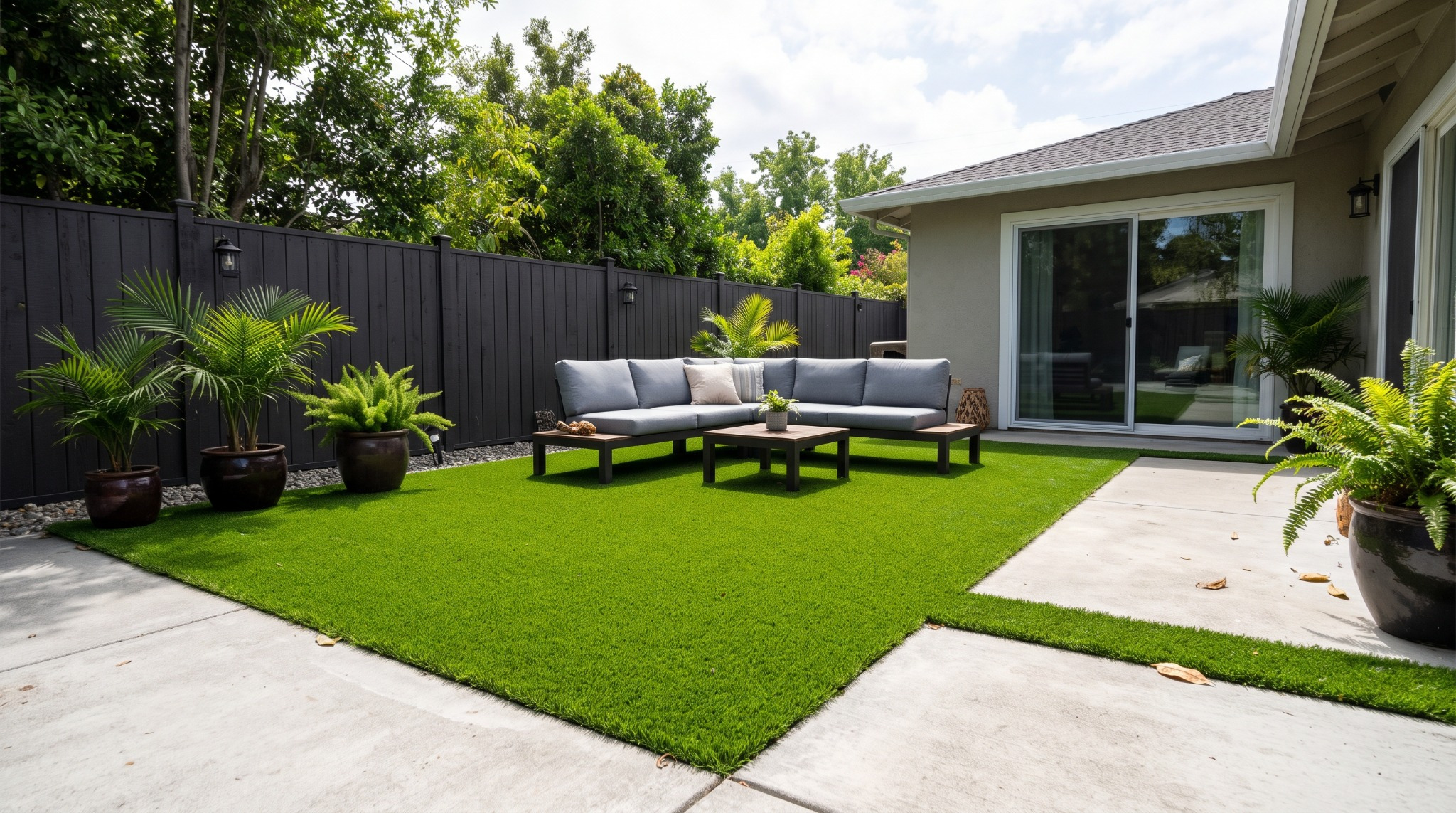
You can install artificial turf directly over existing concrete patios and wooden decks, provided you prepare the subfloor properly, establish dedicated drainage pathways, and use the correct fastening technique. Transforming hard masonry or weathered deck boards with American-made synthetic grass creates a lush, evergreen living space that eliminates splinters, standing water, and mud without requiring regular staining, sealing, or mowing.
Whether you want to modernize an aged concrete patio slab or convert an elevated timber deck into a comfortable outdoor retreat for your family and pets, laying synthetic turf over solid structures requires a distinct installation strategy compared to standard soil applications. By understanding how concrete and wood react beneath synthetic materials, you can create a seamless, professional installation built to last for decades.
Can You Lay Artificial Turf Directly Over Concrete and Wood?
Yes, you can lay artificial turf directly over concrete and wooden surfaces, but you should never glue or fasten turf flat to exterior hardscapes without a drainage layer. Concrete cannot absorb rainwater, and natural wood requires continuous airflow to prevent rot. Adding an engineered underlayment between the hard surface and the turf backing allows moisture to drain away freely, prevents trapped condensation, and adds a soft, shock-absorbing cushion underfoot.
Concrete Patios vs. Wooden Decks: Installation Comparison
Concrete and wood manage moisture, temperature fluctuation, and load distribution differently. Concrete is rigid and non-porous, meaning water must run off along a slope or through an engineered drainage grid. Wooden decks are organic and flexible, requiring open airflow between planks to prevent trapped dampness, dry rot, and mold growth.
| Installation Factor | Concrete Patio Installation | Wooden Deck Installation |
|---|---|---|
| Surface Preparation | Pressure wash, fill deep cracks, grind high spots, and verify slab slope | Inspect structural joists, replace rotted boards, sand splinters, and treat mold |
| Drainage System | Interlocking drainage tiles or channeled shock pads over the slab | Maintain 1/4-inch to 1/2-inch gaps between existing deck boards for runoff |
| Primary Moisture Risk | Puddling, water pooling against the foundation, and surface efflorescence | Trapped moisture leading to wood rot, mildew, and weakened deck framing |
| Fastening Method | Polyurethane turf adhesive along perimeter edges and commercial seam tape | Corrosion-resistant stainless steel deck screws with washers or pneumatic staples |
| Underlayment Type | High-density shock-absorbing drainage pad or rigid plastic drainage grid | Permeable geotextile underlayment or open-matrix drainage mesh |
| Infill Requirements | Standard washed silica sand infill (1 to 2 lbs per square foot) | Lightweight silica sand infill (0.5 to 1 lb per square foot) to limit dead weight |
How to Install Artificial Turf Over an Existing Concrete Patio
Installing synthetic turf over concrete provides a firm, level subbase. Follow these steps to build an installation that stays clean, secure, and free of pooling water.
Step 1: Clean, Repair, and Slope-Test the Slab
Clear all patio furniture, grills, and planters from the installation area. Thoroughly pressure wash the concrete surface to lift away dirt, moss, algae, grease, and peeling paint. Inspect the slab for spalling or wide fissures. Fill any cracks wider than 1/4 inch with an exterior-grade polyurethane or elastomeric concrete patching compound, and grind down uneven joints or sharp ridges that could wear through your turf backing.
Before proceeding, conduct a water flow test by hosing down the bare concrete slab. Watch how water travels across the surface. If you see areas where puddles linger for hours without draining toward your yard or patio gutters, note those low spots so you can bridge them with drainage tiles.
Step 2: Lay a High-Flow Drainage Underlayment Grid
Never glue synthetic grass directly onto an exterior concrete slab without a drainage underlayment. Because concrete cannot absorb moisture, rainwater must have a clear channel to drain beneath the turf backing. Roll out an interlocking plastic drainage cell grid or a permeable, high-density shock pad across the entire patio surface.
This drainage layer creates an elevated air gap between the cold concrete and the turf backing. It allows stormwater to flow freely underneath toward natural runoff channels while providing a soft, resilient cushion beneath your feet.
Step 3: Acclimate, Cut, and Seam Your Turf Rolls
Unroll your synthetic turf rolls across the prepared patio and let them rest under direct sunlight for at least two hours. Sunlight warms and softens the heavy latex or polyurethane backing, releasing shipping wrinkles and making the synthetic fibers much easier to groom upright.
Position every roll so that the blade direction angles consistently across the entire layout. For the most appealing appearance, face the grain of the grass toward your primary viewpoint, such as your living room sliding door or main outdoor seating zone. Trim outer edges using a sharp utility knife fitted with heavy-duty carpet blades, always cutting from the backside between the tufted stitch rows to avoid slicing individual grass blades.
When joining adjacent sections, ensure the distance between the two pieces matches the gauge spacing between the stitch rows on your turf backing. Fold back the neighboring turf edges by roughly one foot on each side. Center commercial-grade synthetic turf seam tape along the seam line, spread an exterior polyurethane turf adhesive using a notched trowel, and carefully marry the edges together without trapping any grass blades in the adhesive.
Step 4: Secure the Perimeter and Apply Infill
Anchor the outer edges of your turf to the concrete perimeter using a 3-inch to 4-inch ribbon of weather-resistant turf adhesive. Avoid gluing down the entire surface, because spot-gluing the perimeter preserves uninterrupted drainage flow beneath the center of your patio.
After the adhesive cures completely, apply washed, rounded silica sand infill across the turf surface using a drop spreader at a rate of 1 to 2 pounds per square foot. Use a stiff synthetic bristle broom or power brush to sweep the sand down into the thatch. The infill weighs down the grass, prevents seasonal buckling, and supports the turf fibers so they stay upright under continuous foot traffic.
How to Install Artificial Turf Over a Wooden Deck
Laying artificial turf over an aged wooden deck conceals weathered, cracked lumber, protects your feet from splinters, and gives you a comfortable, barefoot-friendly surface during sunny days.
Step 1: Inspect Joists and Verify Board Spacing
Carefully evaluate the structural integrity of your deck ledger boards, joists, and surface planks. Replace soft, rotted, or structurally compromised lumber. Secure loose boards with exterior deck screws and counter-sink any protruding nail heads so they sit flush with the wood.
Confirm that your deck boards have uniform gaps of at least 1/8 inch to 1/4 inch between them. These gaps are critical because they serve as your runoff channels. If your deck planks are packed tightly together without gaps, trapped rainwater cannot escape, which can lead to timber rot beneath your synthetic turf.
Step 2: Roll Out a Breathable Separation Layer
Do not apply liquid glue directly to your wooden deck boards. Doing so seals moisture into the grain and rapidly rots the timber. Instead, roll out an open-matrix drainage layer or a non-woven geotextile drainage underlayment across the clean decking.
This breathable separator prevents the rubber backing of your synthetic turf from trapping condensation against the wood. It allows ambient air to circulate continuously beneath the turf, helping the wood dry out thoroughly after rain showers.
Step 3: Fasten the Turf Mechanically
Roll out your turf across the deck surface, align the blade direction, and trim the perimeter along deck posts, steps, and railing perimeters. Rather than chemical adhesives, use mechanical fasteners to anchor synthetic turf to wooden decking.
Fasten the perimeter edges every 6 inches using 3/4-inch to 1-inch stainless steel screws fitted with small finishing washers, or use heavy-duty galvanized pneumatic crown staples. Part the turf thatch with your fingers before inserting each fastener so the screw heads sit tight against the backing, hidden from view and safely beneath barefoot level.
Step 4: Brush in Lightweight Ballast Infill
Apply a light dusting of rounded silica sand infill across your deck turf, using approximately 0.5 to 1 pound per square foot. This modest layer provides enough ballast to prevent thermal expansion ripples while keeping dead load weight minimal on elevated deck joists. Brush the turf vigorously against the grain to finish the installation.
Managing Rain Runoff and North Georgia Clay on Hardscapes
Outdoor surfaces in Dalton, GA must withstand intense summer heat and severe seasonal downpours. In areas with dense red clay soil, heavy rain can quickly back up against ground-level patios and lower deck structures, carrying mud and sediment onto hard surfaces.
Elevating your artificial grass with a channeled drainage pad prevents muddy backup, pooling water, and mold buildup. If you share your deck or patio with four-legged companions, pair your drainage system with an antimicrobial pet turf line. Urine and washdown water pass through the permeable backing directly into your drainage channels, keeping your living area sanitary and odor-free with a simple rinse from a garden hose.
Best Artificial Turf Styles for Patios and Decks
Selecting the right turf variety ensures your installation stays resilient, comfortable, and realistic across years of daily use:
- Premium Residential Lawn Turf: High-density options like True Beauty 80 oz Face Weight and Lawn 80-UH provide exceptional plushness, realistic multi-tone thatch, and natural cushion over hard concrete slabs.
- Specialized Pet Turf: Engineered lines like Forever Pet RTY-UH and Platinum Pet feature non-absorbent, stain-resistant fibers with rapid-flow backings designed for easy sanitizing and continuous pet use.
- Multi-Use Low-Pile Turf: For high-traffic decks, outdoor fitness areas, or patio dining spaces, low-pile varieties with non-skid backings like Franchise Non-Skid deliver stability, snag resistance, and easy chair mobility.
All running-line turf options from our team are manufactured in the USA using top-tier materials engineered to remain vibrant, safe, and durable for up to 20 years with standard care.
Upgrade Your Patio or Deck with Sports Turf Warehouse
Ready to transform your concrete patio or wooden deck into an inviting, low-maintenance outdoor retreat with American-made synthetic turf at everyday warehouse prices? While your final project total will depend on your specific roll selection, overall square footage, and necessary underlayment materials, we back every product with our lowest-price guarantee and a 100% satisfaction guarantee.
You can order your free turf samples directly through our website or connect with our Dalton warehouse team for tailored advice on adhesives, drainage pads, and cut lengths. At Sports Turf Warehouse, we proudly provide fast, dependable delivery across Dalton, GA, Dalton, Varnell, Chatsworth, Ringgold, and Calhoun, GA, throughout Whitfield, Murray, Catoosa, and Gordon Counties, and across the entire North Georgia and Greater Chattanooga corridor. Reach out to our team today to get your project started.