
How to Read a Turf Spec Sheet: Decoding Face Weight, Pile Height, and Stitch Rate
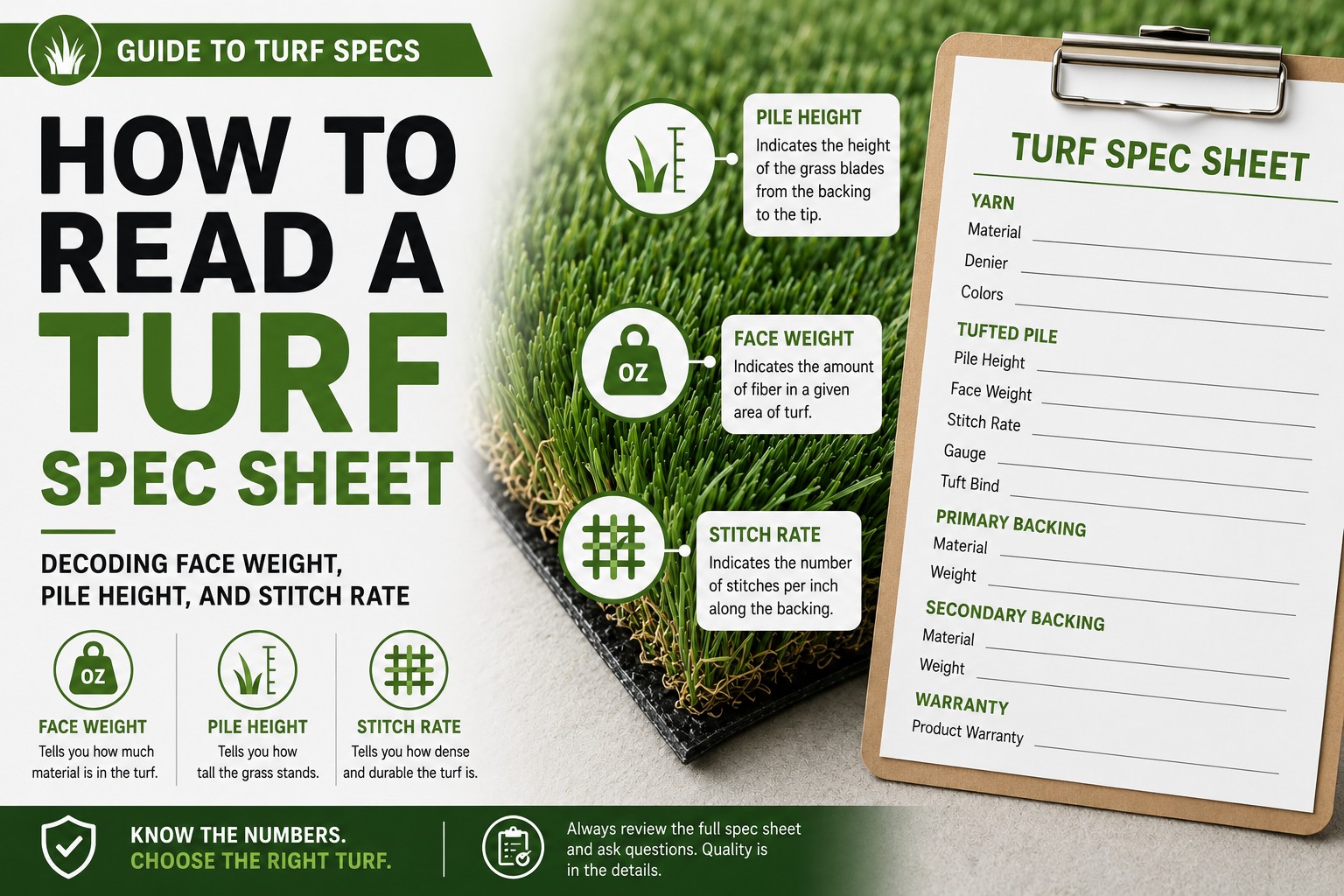
Walking into a turf showroom or scrolling through product listings can feel a little like reading a foreign language. Numbers and terms get thrown around, and it is easy to nod along without really knowing what any of them mean for your finished space. The good news is that a spec sheet is not nearly as intimidating as it looks once you understand what each line is actually telling you.
We at Sports Turf Warehouse have spent years helping homeowners and contractors across North Georgia and the Greater Chattanooga area make sense of these details. From our home base in Dalton, we have watched countless customers transform a confusing list of specs into a confident buying decision. Once you know the three numbers that matter most, you can compare any two products on a level playing field.
The Three Numbers That Tell the Real Story
Most turf spec sheets are crowded with measurements, but three of them carry the most weight when it comes to how your turf will look, feel, and hold up over time. Those three are face weight, pile height, and stitch rate. Each one describes a different quality of the turf, and together they paint a complete picture.
Think of these numbers as a recipe. One ingredient alone will not tell you how the dish turns out, but read together they reveal whether a turf is built for a lush backyard lawn, a high-traffic playground, or a competition-ready field. Learning to read all three at once is what separates a guess from a smart choice.
Face Weight: The Heft Behind the Blades
Face weight measures the amount of yarn used in the turf, expressed in ounces per square yard. It counts only the fibers you can see and touch, not the backing underneath. A higher face weight generally means a denser, more luxurious surface that feels plush underfoot.
You will see this number front and center on many product listings, including the True Beauty turf with its generous 80 ounce face weight. A heavier face weight tends to wear better under heavy use, which is why it matters so much for busy lawns and recreational areas. That said, more is not always better for every project, since the right number depends on how the space will be used.
Pile Height: How Tall Those Blades Stand
Pile height is the measurement from the backing to the tip of the turf blade, usually given in inches. Shorter piles around half an inch create a tidy, manicured look that holds up beautifully on putting greens and sports surfaces. Taller piles closer to two inches give you that soft, natural lawn appearance many homeowners love.
The key is matching pile height to function rather than chasing the tallest blade. A putting green needs a low, true roll, while a family backyard might call for something fuller and more forgiving. The athletic turf options are designed with sport-specific pile heights so the surface performs exactly as the game demands.
Stitch Rate: The Density You Cannot Always See
Stitch rate, sometimes listed as stitch count or gauge, tells you how tightly the fibers are packed into the backing. A higher stitch rate means more blades per square inch, which translates to better durability and a fuller appearance. It is the quiet hero of the spec sheet, often overlooked but hugely important for longevity.
When two products share a similar face weight, the stitch rate can be the deciding factor in how well each one resists matting and traffic. This is especially true for running line turf, where consistent density keeps the surface looking fresh season after season.
Putting the Numbers to Work
Once you understand the individual specs, the real skill is reading them together to match a product to your project. A few simple habits will keep you on track:
- Start with how the space will be used, then let the function guide which specs matter most.
- Compare face weight only between products with similar pile heights, so you are weighing like against like.
- Treat a high stitch rate as your best friend for high-traffic areas like playgrounds and pet zones.
- Order free samples before you commit, because numbers on paper feel very different from turf in your hands.
- Ask questions whenever a spec is unclear, since the right guidance saves money and regret later.
Reading a spec sheet this way turns a wall of numbers into a clear conversation about your goals. You stop shopping by price alone and start choosing turf that genuinely fits your space. That confidence is exactly what leads to a result you will be happy with for years.
Talk It Through With Our Dalton Team
When the numbers still feel like a puzzle, we are always glad to help you fit the pieces together. Reach out to us and tell us about your project, and we will walk you through the specs and even recommend the right product for your goals. Our custom turf services and friendly guidance are here to make sure your space performs as beautifully as it looks.