
Calculating How Much Turf You Need: A Simple Guide to Measuring Your Yard
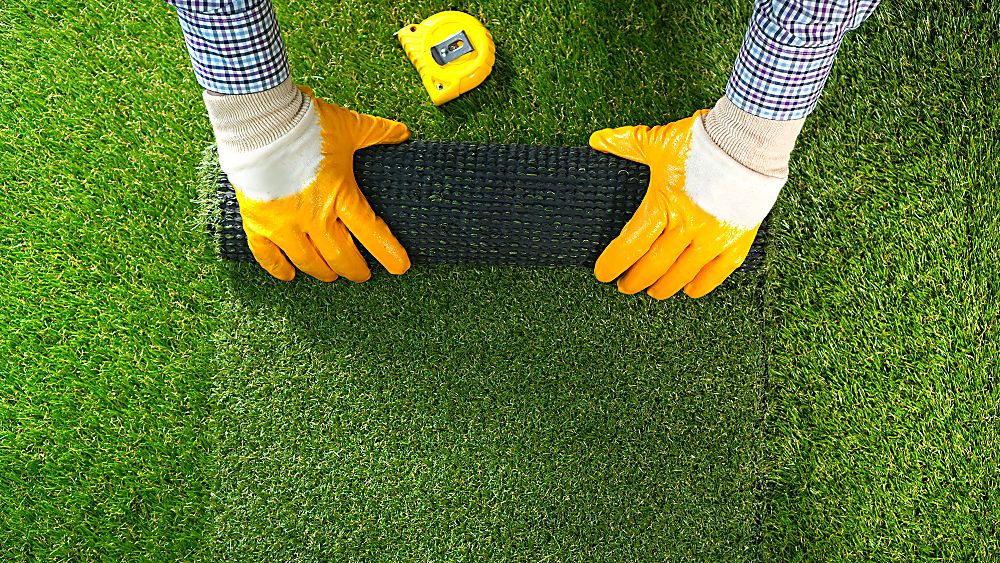
Measuring your outdoor space for artificial turf is one of the most important first steps in any project. Getting accurate numbers ensures you order enough material without ending up with excessive waste.
Whether you are updating a backyard lawn in Whitfield County or mapping out a training zone in Ringgold, measuring your yard follows a simple process.
Step 1: Essential Tools for Measuring Your Yard
Before stepping outside, gather these basic tools:
- Measuring tape (a 100-foot tape measure works best for large areas)
- Pen and paper or a tablet to draw a layout sketch
- Landscaping stakes or flags to mark tricky boundaries
- A calculator
Having a clear sketch of your property allows you to break complex shapes down into simple, manageable sections.
Step 2: Measuring Simple and Complex Yard Shapes
Turf typically comes in rolls of standard widths (such as 15 feet). When taking measurements, always plan for straight rectangular cuts to minimize seaming.
Rectangular and Square Spaces
For standard square or rectangular yards, measure the total length and width in feet.
- Formula: Length × Width = Total Square Footage
- Example: A 20 ft. × 30 ft. space requires 600 sq. ft. of turf.
If you are exploring option categories for your yard, take a look at our lawn specials or browse our general turf specials to fit your project budget and style.
Irregular and Curved Yards
If your yard features curved garden beds or winding pathways, break the overall area into smaller geometric shapes (rectangles, triangles, or squares).
- Measure each individual section separately.
- Calculate the square footage of each small area.
- Add all section totals together.
- Add a 10% waste buffer to account for trimming around curves.
For specialized layouts, such as custom agile training lanes, agility grids, or custom logos, our team offers dedicated custom inlay services and tailored custom turf services to match your exact dimensions.
Step 3: Accounting for Turf Roll Widths and Seam Alignment
Synthetic turf features a natural grain direction (the pile direction). To maintain a seamless look, every piece of turf must be installed facing the exact same direction.
When mapping out your roll layout:
- Plan seams along parallel lines.
- Order slightly more length than your physical space requires to allow for trimming overlapping seams.
- Remember that roll widths are fixed, so measure your width requirements in full roll increments.
If you want to review full product details or browse options for specific project applications, check out our in-stock turf options today.
Frequently Asked Questions
Do you offer installation services or materials?
We do not provide installation services or sell installation materials. However, you can easily purchase all necessary sundries from your local home improvement store.
Can I sample the turf before making a decision?
Yes! We offer free samples of our top-of-the-line products so you can evaluate colors, pile heights, and textures in your own yard. You can request your sample kit directly on our free samples page.
About Us
Sports Turf Warehouse is a family-owned and operated business based in Dalton, Georgia. We are proud to serve homeowners and contractors throughout Dalton, GA, including Chatsworth, Ringgold, and Calhoun. We specialize in providing high-quality turf solutions designed for durability, performance, and visual appeal across residential, recreational, and athletic applications.
Whether you need athletic turf for sports fields, lawn turf for residential properties, playground turf for safe play areas, pet turf for furry friends, or multi-purpose turf for versatile applications, our knowledgeable team is here to help you design the perfect space. Have questions about product selection? Feel free to contact us or explore our FAQ page today!