
Understanding Turf Roll Widths, Seams, and Directionality Before You Order
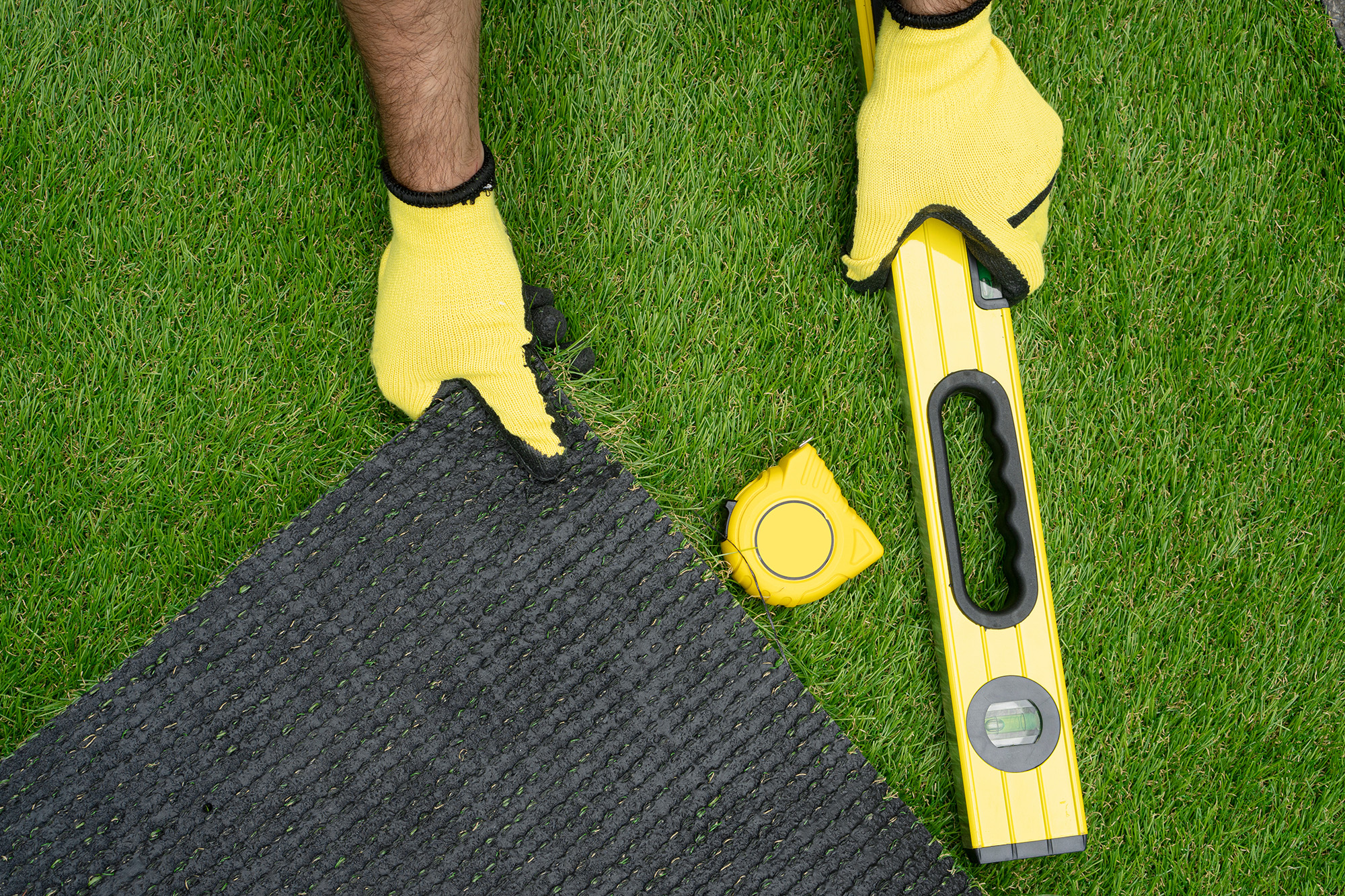
Ordering artificial turf is exciting, but a little planning up front makes the difference between a finished space that looks seamless and one that always feels a bit “off.” Three details tend to trip people up more than any others: roll width, seams, and directionality. Understanding how these work before you place an order helps you buy the right amount of material, reduce waste, and end up with turf solutions that look natural from every angle.
At Sports Turf Warehouse, we walk homeowners and contractors through these details every day. Here’s what you’ll want to know before you order.
Why Roll Width Matters More Than You Think
Turf isn’t sold by the individual blade or the square patch, it comes on large rolls. The width of that roll determines how your project is laid out, where your seams fall, and how much material you’ll actually need. Choosing a width that fits your space is one of the easiest ways to keep your project clean and efficient.
Common Turf Roll Widths
Most artificial turf products are manufactured in a few standard widths. The most common you’ll encounter include:
- 15-foot rolls – the industry standard for the majority of turf products
- 12-foot rolls – common for certain lines and tighter spaces
- Custom-cut lengths – rolls are typically cut to the length you need, so you’re really planning around width
Because width is fixed but length is flexible, your layout strategy should always start with the width. To confirm the exact width of any product you’re considering, check the individual product page or reach out to our team through our contact page.
How to Match Width to Your Space
The goal is to cover your area using the fewest pieces and the fewest seams possible. A few pointers:
- Measure your longest continuous run and see how it lines up with a 15-foot width
- For a small backyard or putting green, a single width may cover the whole area
- For larger athletic fields or multipurpose spaces, plan how multiple widths will sit side by side
Thinking this through before you order helps you avoid awkward narrow strips and unnecessary offcuts.
Understanding Seams (and How to Minimize Them)
A seam is simply where two pieces of turf meet. Seams are a normal part of nearly any installation larger than a single roll width, and when planned well, they’re barely noticeable. When planned poorly, they can become the first thing your eye lands on.
What Causes Seams
Seams appear any time your space is wider than a single roll or when the layout requires multiple sections. The number and placement of seams depend on:
- The overall dimensions of your project
- The roll width you select
- How you orient each piece of turf
Tips for Cleaner, Less Visible Seams
A little foresight goes a long way toward keeping seams discreet:
- Plan seam placement in lower-traffic or less visible areas when possible
- Keep the grain running the same direction across every piece (more on this below)
- Order slightly extra material so you have room to align pieces properly rather than forcing a tight fit
- Consider custom fabrication for complex layouts, logos, or multi-color designs
For projects that involve logos, lettering, or multi-color designs, our custom inlay services and custom turf services can handle the detailed cutting and seaming so your finished piece arrives ready to lay. You can also learn more about our fabrications for tailored projects.
Keep in mind that Sports Turf Warehouse supplies the turf, not the installation. Any sundries needed for the actual install, such as seam tape and adhesive, can be picked up from your local home improvement store.
Directionality: The Detail Most People Miss
Directionality, sometimes called “grain” or “nap,” is the direction the turf blades naturally lean. It’s subtle, but it has a big impact on how uniform your finished surface looks.
What Is Turf Directionality?
Just like carpet or velvet, artificial turf has a direction to it. Run your hand one way and the blades lie flat and smooth; run your hand the other way and they stand up. That lean is the grain, and every piece of turf on a roll shares the same directionality.
Why Grain Direction Affects Appearance
When two pieces of turf are laid with their grain pointing in different directions, they’ll reflect light differently and can appear to be two slightly different shades, even when they’re identical products from the same roll. To keep your space looking cohesive:
- Always install every piece with the grain facing the same way
- Face the grain toward your main viewing point (for example, toward the house or the primary spectator side of a field) for the richest look
- Mark the grain direction on the back of each piece as you lay it out so nothing gets flipped
This single habit is often what separates a professional-looking result from a patchy one.
Measuring and Planning Before You Order
Bringing it all together, here’s a simple pre-order checklist to keep your project on track:
- Measure your space carefully, noting the longest dimensions
- Decide how roll widths will lay out across the area
- Identify where seams will fall and aim to minimize them
- Confirm the grain will run in one consistent direction
- Add a small percentage of extra material for trimming and alignment
- Double-check the specifications on the exact product you want
If you’re unsure about any of these steps, request a quote and our knowledgeable team will help you plan the right amount of material for your project.
Choosing the Right Turf for Your Project
Different applications call for different products, and the right turf makes width, seam, and grain planning even easier. Explore our specialized selections:
- In-stock lawn turf for residential yards
- Athletic turf for sports fields and training areas
- Playground turf for safe, durable play spaces
- Pet turf built for furry family members
- Multipurpose turf for versatile installations
Want to see and feel the quality before you commit? Order free samples and check the color, texture, and grain in your own space and lighting.
About Sports Turf Warehouse
Sports Turf Warehouse is a family-owned and operated company based in Dalton, GA, and proudly serving as North Georgia’s premier turf destination. From our warehouse in the heart of Dalton, our reach extends throughout the entire North Georgia and Greater Chattanooga corridor, including neighboring communities like Varnell, Chatsworth, Ringgold, and Calhoun across Whitfield, Murray, Catoosa, and Gordon Counties.
Our long-lasting, high-quality products bring durability, performance, and visual appeal to residential lawns, putting greens, athletic fields, playgrounds, pet areas, and many other applications. Because we’re rooted right here, we understand the specific soil, climate, and landscape needs of our neighbors better than anyone else. Our knowledgeable staff takes great pride in helping you design your perfect space, and we’re always eager to answer any questions you may have.
Ready to get started? Contact us today, and let’s create a space that performs as beautifully as it looks.